
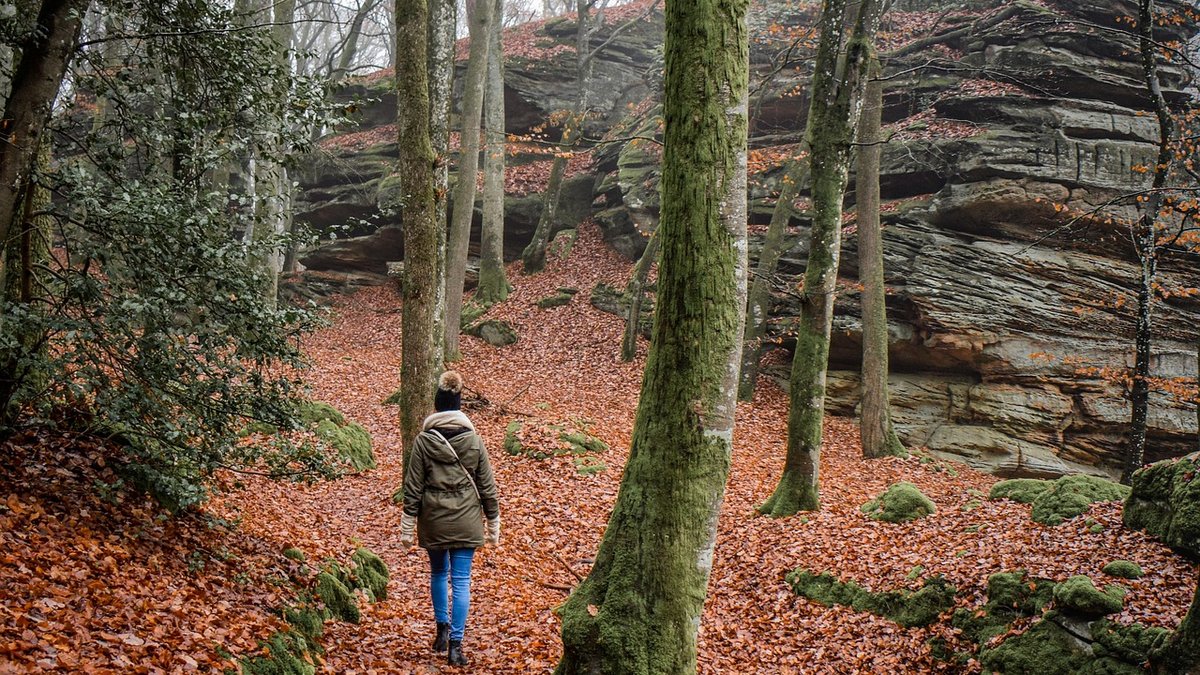
England and Wales have no general right to wild camp. The Lake District is not a free-for-all: the practice survives on a fragile, unwritten agreement between walkers, landowners and the National Park. In practice this means a single small tent, for a single night, on open unenclosed fell land — above the highest wall or intake line on the map — is generally tolerated. It is not a right, and it can be withdrawn.
Everything else is out. No camping in fields, in enclosed pasture, on lake shores behind a fence, beside a road or lay-by, in car parks, or on the in-bye land just above a village. If there is a wall, a gate, a fence or livestock, you are below the line and you should not be there. Learn to read the enclosure line on your map before you go; it is usually the point where the footpath leaves the tidy fields and meets the open fell.
The classic guidance exists for a reason: pitch late and break camp early. Arrive at your spot as the day walkers are heading down, set up quickly, and be gone by mid-morning — ideally before 8am. You will disturb grazing and wildlife far less, you will be less conspicuous, and you will walk more of the day rather than sitting around camp.
Choose ground sensibly:
Take everything home, and that means everything: tea bags, orange peel, wet wipes, bottle tops, plasters and the scraps you would sooner forget. A dedicated rubbish bag weighs almost nothing. Food waste left out attracts sheep and foxes, and it is still litter.
Human waste needs a plan before you set off. The best option in the Lakes, where soil is thin and heavily used, is to carry it out in a sealed bag. If you must bury, dig a hole 15–20cm deep well away from water, paths and pitches — at least 30m from any stream or tarn — and carry the paper out with you. Never burn it; one stray spark on dry fell is a disaster.
Wash yourself and your pans at least 30m from any water source, and do not use soap, shampoo or washing-up liquid in a tarn or stream. Cold water and a bit of scrubbing does the job.
Open fires have no place on the fells. Even a small fire on peat or tussock leaves a scar that lasts decades, and the risk in a dry spring is obvious. Bring a stove and keep it on a stable, non-flammable surface.
Farmland deserves particular care. Enclosed fields are working land: livestock, hay, lambing, gates left open. Do not camp in them, do not cross them without a right of way, and always leave gates as you find them. Keep dogs on a short lead around sheep and cattle, and give cows with calves a wide berth.
Wild camping is tolerated in part because most wild campers are unobtrusive. Keep it that way:
Plenty of fell walkers build a trip around a mix of the two: a wild night or two high on the fells, then a Lake District cottage as a base for the rest of the week. That blend works well — you get the solitude of a high camp and the drying room, hot bath and proper kitchen that make the following day's walk possible.
If you are doing that, park considerately. Do not leave a car overnight at a trailhead or in a village street where it is not permitted; leave it at your base and walk or use the bus. Keep noise down in hamlets and lanes, drive slowly through villages, and put some money behind the bar of the pub you pass through. Cottage holidays and wild camping sit happily together, provided walkers remember that the fells, the villages and the people who live between them are all part of the same place — and that a quiet, tidy, well-behaved night out leaves it exactly as you found it.

Hi, my name is Anthony kuber. I am artist and fashion designer.
I love to travel and writing blogging.
Your email address will not be published. Required fields are marked *
Software Developer & Writer
Hey, I'm Diva, a developer and writer blending code and creativity. I'm driven by a deep curiosity and a relentless pursuit of excellence. Join me as I craft digital solutions and captivating stories.


